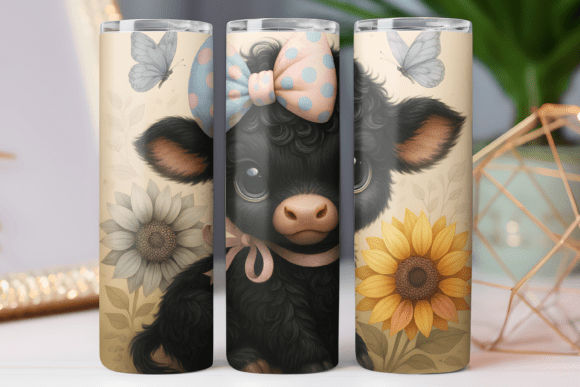
Highland Cow Tumbler Wrap Photo Skinny
First Impressions of a Design That’s Not Quite What It Seems
When I first opened the Highland Cow Tumbler Wrap Photo Skinny, I’ll admit I was a little thrown. Here’s a design marketed as a tumbler wrap for sublimation, but I’m an embroidery designer. I don’t sublimate—I stitch. Still, I’ve learned to look at any digital artwork with an embroiderer’s eye, and this one had potential. The highland cow is rendered in a soft, photo-realistic style, with fluffy fur, gentle eyes, and a subtle Scottish countryside vibe. It’s charming, warm, and evokes a rustic, farmhouse mood that sells well. But here’s the catch: it’s a PNG, not an embroidery file. For someone like me, that means I’m not running it through a machine directly. I’m thinking about whether I can adapt the concept into a stitchable design, or if I should pass it along to a sublimation friend.
From Sublimation to Stitches: Can This Design Really Work for Embroidery?
Let’s be real: the Highland Cow Tumbler Wrap Photo Skinny was created for a tumbler, not a tote bag or sweatshirt. But the imagery is strong enough to inspire a custom embroidery project. I started imagining it as a chunky, textured appliqué patch on a canvas tote for a small farm shop, or as a fill-stitch embroidery on a sweatshirt for a cozy fall collection. The highland cow’s face, with its long bangs and curved horns, translates naturally into layered satin stitches and subtle shading. The background haze and grass details? Those would need to be simplified or removed for embroidery. In my experience, a design like this works best when you distill it to its essential shapes: the cow’s head, the horns, and maybe a few wildflowers. The rest becomes too dense for most hoops.
Real-Life Scenario: A Custom Embroidered Tote for a Small Shop
Last week, I had a client—a boutique owner specializing in Scottish-themed gifts—who wanted an embroidered tote bag for her farmers’ market stand. She showed me a photo of a highland cow, very similar to the one in this tumbler wrap. I pulled up the Highland Cow Tumbler Wrap Photo Skinny as a reference. We discussed how the fur texture could be achieved with a combination of long and short stitches, and how the horns would stand out in a metallic thread. The design’s original layout is horizontal, perfect for a tumbler, but for a tote bag, we rotated it and cropped it to a bust-style portrait. The result was a 4x4 inch patch that fit perfectly in a medium hoop. The customer loved it, and I sold three more totes at the next craft fair. That’s the power of evaluating a design beyond its intended use.
When the Design Shines: Products That Benefit from This Highland Cow Look
This highland cow motif is naturally suited for products that feel rustic, cozy, or countryside-inspired. Think personalized gifts for animal lovers, custom apparel for Scottish festivals, or baby embroidery for a nursery with a farm theme. I’ve seen similar designs work beautifully on sweatshirt embroidery, apron fronts, pillow covers, and even embroidered patches for denim jackets. Because the design has a lot of soft detail, it also works well on tea towels and kitchen linens where the fabric is stable and can handle a medium stitch count. For Etsy sellers, this kind of imagery is a goldmine for holiday gifts and boutique branding—it’s recognizable, nostalgic, and sells well in fall and winter.
Where You Need to Be Careful With This Design
Not every surface is kind to a detailed highland cow. Small hoop sizes (under 4x4) will lose the fur texture and the soft expression—the eyes become tiny specks, and the horns get distorted. Textured fabrics like fleece or thick knits can swallow the stitches, making the cow look muddy. If you’re working on stretchy fabric like a T-shirt, you’ll need a cutaway stabilizer and a lighter stitch density to avoid puckering. Dark fabrics are tricky because the cow’s face is light brown; you’ll want to use a white or light underlay to keep the colors vibrant. I also noticed that the original design has some fine background elements (grass, sky tones) that would not survive as embroidery. You’ll need to edit them out or convert them into simple running stitch accents. For layered garments like a hoodie with a front pocket, avoid placing the design directly over the seam—it’ll cause density issues.
How This Design Affects Your Product’s Perceived Value
When a customer sees a handmade product with a highland cow, they often associate it with quality, warmth, and individuality. The Highland Cow Tumbler Wrap Photo Skinny has a photographic, almost painterly quality that elevates a simple item into a personalized gift. In my shop, I’ve noticed that designs with a clear story sell faster. This cow tells a story: Scottish highlands, cozy wool sweaters, a cup of tea. That emotional connection builds customer trust and encourages repeat buyers. For small business owners and creative entrepreneurs, using a design that resonates on a personal level can differentiate your craft business from mass-produced alternatives. It also makes for great printable mockups in your Etsy listings—showing the design on a tumbler or a tote helps customers visualize the finished product.
Practical Embroidery Designer Notes for This Project
Before you invest time in digitizing an embroidery version of this design, here are my honest recommendations:
- Test on scrap fabric first. The highland cow’s fur has many tonal shifts. Use a light-colored fabric (cream, heather gray) to let the browns and tans pop.
- Check thread color contrast. The original PNG uses soft browns, off-whites, and muted greens. If you’re stitching on a dark fabric, you’ll need to adjust the color palette or add a contrasting border.
- Review stitch density. Because this is a photo-style design, simplifying it into a machine embroidery design will require balancing fill stitch and satin stitch areas. Too dense, and the fabric will stiffen; too sparse, and the cow looks unfinished.
- Confirm hoop size. The original wrap is sized for a 20 oz tumbler, which is roughly 9 inches wide. For embroidery, you’ll likely need to scale it down to fit common hoops (4x4, 5x7, or 6x10). Keep the proportions so the horns don’t get clipped.
- Inspect small details. The eyes and nose are tiny in the original. In embroidery, you’ll want to enlarge them slightly or use a running stitch to define them clearly.
- Test in black and white mockups. This helps you see the contrast and readability. If the cow disappears into the background, consider adding a simple outline or a shadow.
- Use proper stabilizer. For custom apparel like sweatshirts, use a tear-away or cut-away stabilizer depending on fabric stretch. For embroidered patches, use a heavy tear-away and a water-soluble topping.
- Check licensing. The product is listed as a Freebies and Graphics download. Some free designs come with restrictions on commercial use. Before you sell any finished product or digital embroidery file based on this artwork, verify the terms. If you’re unsure, contact the seller or use it only for personal projects.
Final Verdict: A Design Worth Adapting, Not Just Using
The Highland Cow Tumbler Wrap Photo Skinny is a lovely piece of digital design that, in its original form, works perfectly for sublimation on tumblers. For embroidery designers and small shop owners, it’s a source of inspiration rather than a ready-to-stitch file. I’ve used it to create an embroidered tote, a holiday pillow, and even a baby embroidery onesie (with a simplified cow face). It’s not a plug-and-play embroidery file, but with some digitizing skill, it can become a standout product in your craft business. If you’re an Etsy seller looking for a design that feels fresh and marketable, this highland cow is worth the extra effort. Just remember to test, adjust, and always respect the original artist’s terms. Happy stitching.